
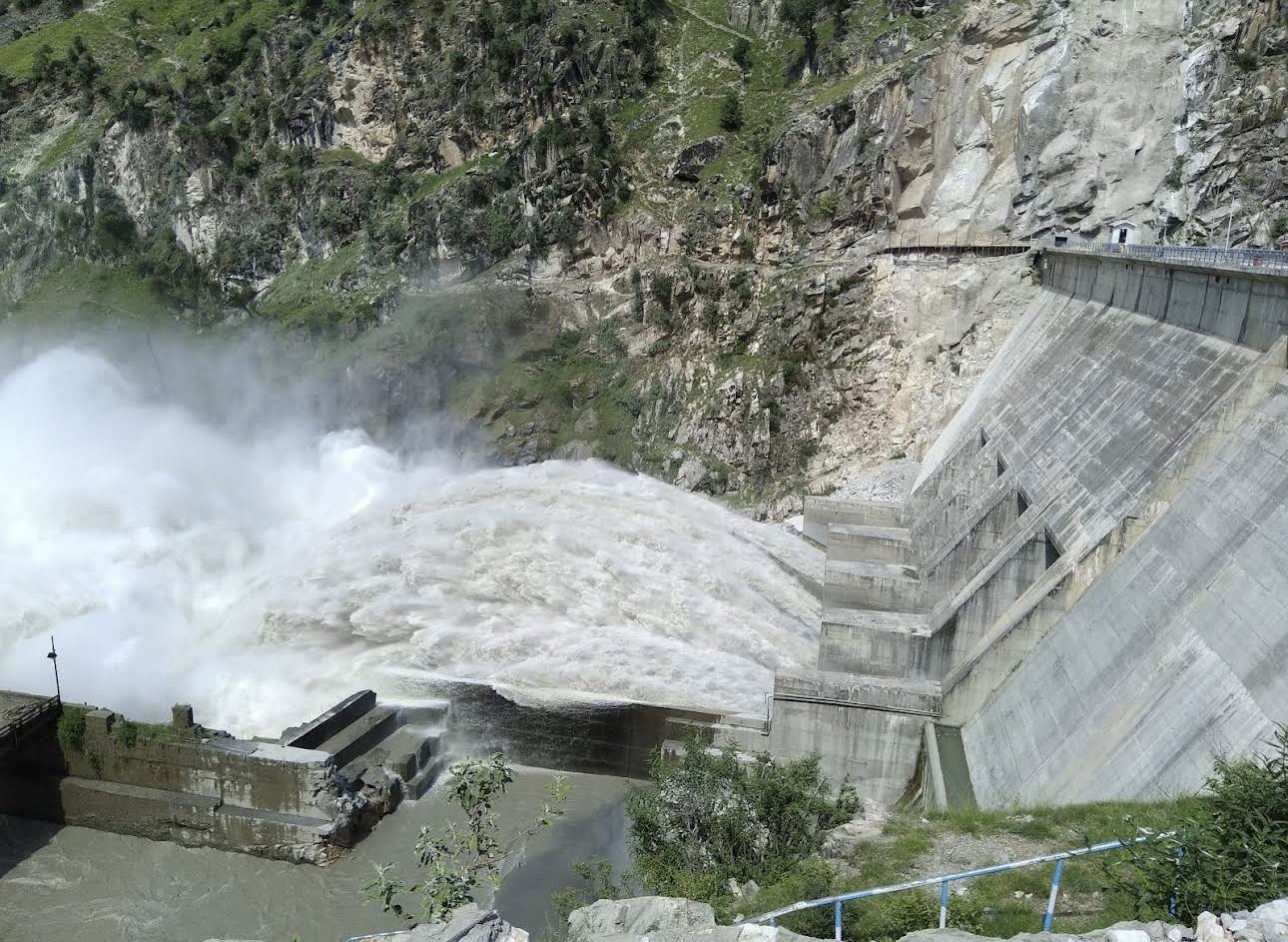
The Chenab River: A Source of Ambition in Jammu and Kashmir
By Peerzada Mohsin Shafi
The Chenab River has long been a significant source of ambition in Jammu and Kashmir, with its fast-flowing waters offering energy, opportunity, and the promise of development.
Various hydropower projects already harness the river’s power, such as Kiru, Kwar, Rattle, and Pakal Dul, forming a growing chain of turbines and tunnels.
With the recent opening of financial bids for Dulhasti Stage II on January 13, 2026, a new chapter begins for the Chenab River, combining engineering expertise with increasing public expectations in Kishtwar.
Dulhasti Stage II, an extension of the successful Stage I commissioned by NHPC in 2007, aims to add 260 megawatts through two units of 130 megawatts each, utilizing the river’s potential without building a new large dam.
The project is strategically located in Kishtwar district, with the dam near Dul village and the underground powerhouse set to rise on the left bank near Benzwar village.
Dulhasti Stage II is part of a larger plan for the Chenab basin, with water from the Pakal Dul project on the Marusudar River flowing into the Dulhasti reservoir, enhancing renewable energy capacity without additional river diversion.
After facing delays, the project has now reached a crucial stage with the opening of civil works tenders, signaling progress in the region’s infrastructure development.
Environmental clearances are in place, ensuring minimal impact on land, water, communities, and local ecology, with a strong focus on risk management in the face of natural disasters.
The project’s economic benefits include local employment opportunities during construction and a significant boost to the region’s power supply upon completion.
Despite challenges posed by the Himalayan landscape, including steep slopes and seismic activity, the project aims to demonstrate efficient planning and execution in demanding conditions.
Dulhasti Stage II embodies the intersection of ambition and geography in the mountains, offering hope for local communities, policymakers, and engineers alike.
With careful construction and adherence to technical standards, the project can not only power the future but also preserve the natural environment that makes such progress possible.
- The author is an infrastructure columnist from Anantnag and can be reached at [email protected].
Transform the following sentence from active voice to passive voice:
Active: The teacher assigned the homework to the students.
Passive: The homework was assigned to the students by the teacher.
