
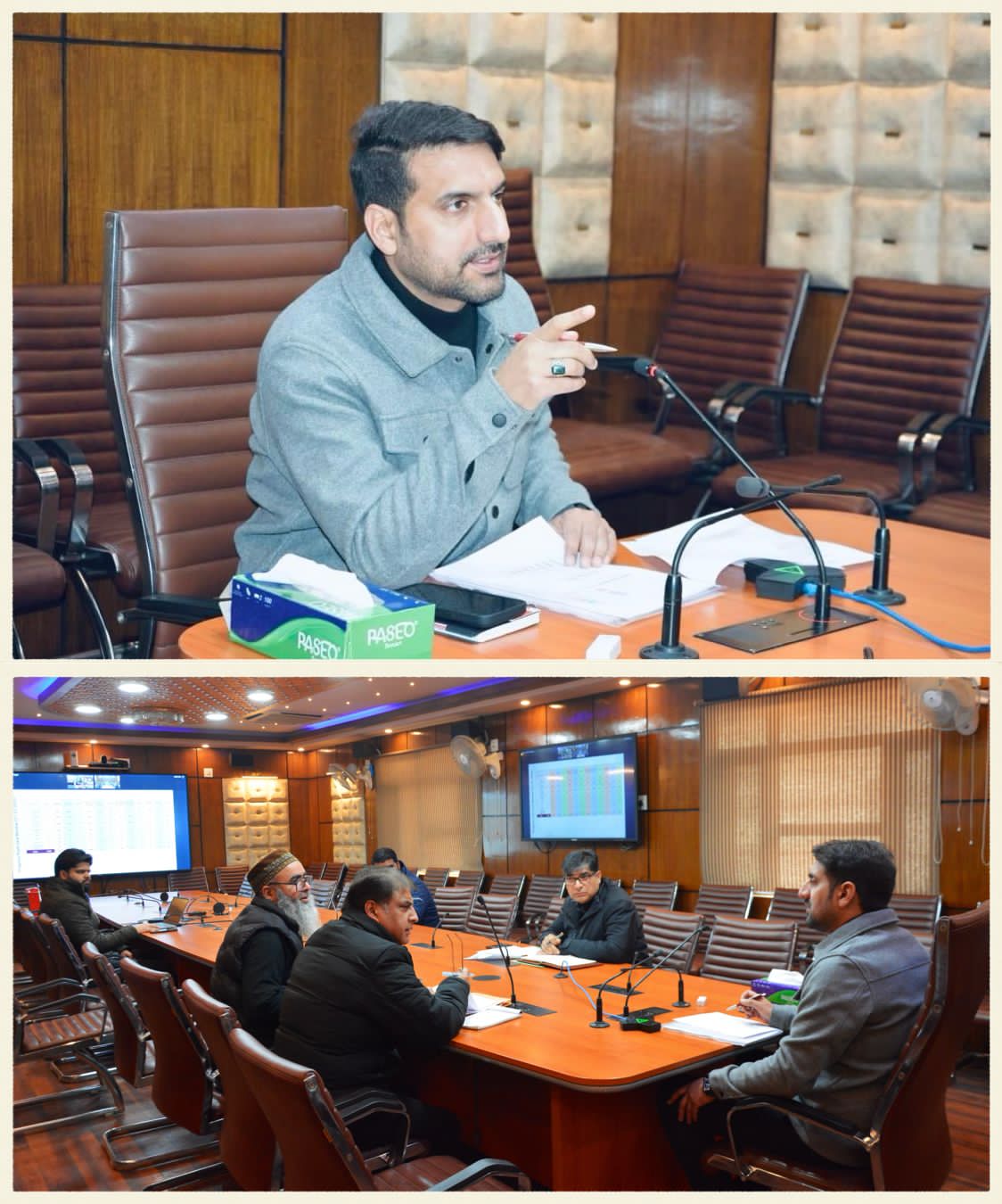
Review Meeting on Swachh Bharat Mission in Jammu and Kashmir
The Secretary of the Rural Development Department and Panchayati Raj in Jammu and Kashmir, Mohammad Aijaz Asad, recently presided over a high-level meeting to assess the progress of the Swachh Bharat Mission–Gramin (SBM-G) and discuss the formulation of the Annual Implementation Plan (AIP) 2026–27 for the region.
Progress of SBM-G Assets
During the meeting, it was highlighted that community-level initiatives such as Community Compost Pits, Community Soak Pits, Community Sanitary Complexes, and Segregation Sheds have shown positive progress. However, larger infrastructure projects like Plastic Waste Management Units (PWMUs), Faecal Sludge Treatment Plants (FSTPs), DEWATS, and GOBARdhan plants are facing delays due to tendering issues and slow execution.
The Secretary emphasized the importance of developing Plastic Waste Management Units near Yatra transit camps to enhance sanitation facilities and waste management practices. He also stressed the revenue-generating potential of such facilities and the significance of integrated planning for their maintenance.
District-wise Progress
Some districts, including Rajouri, Jammu, Reasi, Samba, and Udhampur, have shown significant progress in finalizing tenders, initiating work early, and completing sanitation assets. Similarly, Bandipora and Kupwara have also demonstrated improvement, indicating better coordination between planning and execution at the district level.
Environmental Concerns
The Secretary emphasized the need for a permanent solution for debris management in rural and semi-urban areas to address environmental concerns effectively.
Implementation Strategies
To address implementation gaps, the Secretary directed immediate completion of tendering for major assets and prompt commencement of works where allotments have been made. District officials were tasked with resolving land-related issues, ensuring work initiation, and coordinating with line departments for timely execution.
Monitoring and Reviews
The Secretary instructed the Director General of Rural Sanitation to conduct bi-weekly reviews of SBM-G asset progress. Additionally, district officials were asked to monitor implementation continuously in their respective areas, with a focus on land availability and timely initiation of works.
Focus on IHHLs and GOBARdhan Initiative
Under the IHHLs scheme, geo-tagging and timely clearance of pending cases were prioritized to maintain Open Defecation Free (ODF) sustainability. The Secretary highlighted the importance of GOBARdhan projects and FSTPs for sustainable waste management and directed officers to expedite tendering and ensure convergence with other schemes.
Policy Review
The status of Operations & Maintenance (O&M) and Faecal Sludge and Septage Management (FSSM) policies was reviewed, with draft policies currently under examination for long-term sustainability of SBM-G assets.
Future Planning
Discussions on the AIP 2026–27 focused on realistic planning, prioritization of incomplete works, and a greater emphasis on large waste-management infrastructure. The Secretary called for a results-oriented approach to ensure timely completion and effective utilization of sanitation assets in rural Jammu and Kashmir.
Supervision and Reviews
The Secretary directed district officials to personally oversee unresolved land issues, review settled cases, and conduct monthly SBM reviews. The meeting concluded with a comprehensive progress report on SBM-G assets presented by the DG Rural Sanitation.
