
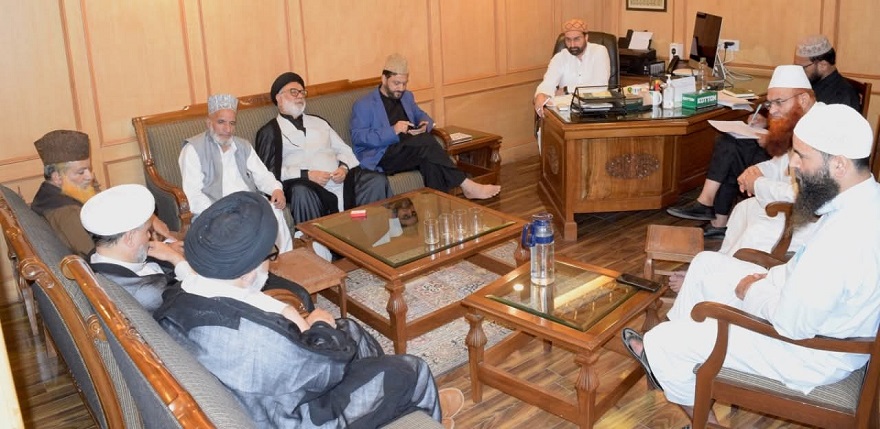
Mutahida Majlis-e-Ulema Raises Concerns Over Police Data Collection in Jammu and Kashmir
The Mutahida Majlis-e-Ulema (MMU), the largest conglomerate of Islamic religious organizations in Jammu and Kashmir, has voiced deep concerns regarding the current police activities in the Valley. The MMU has raised serious questions about the extensive and intrusive information being sought by the police concerning mosques, their management committees, imams, khatibs, and individuals associated with places of worship, including their family members.
In a recent statement, the MMU expressed its unease over the distribution of detailed multi-page forms by the police. These forms request highly personal and sensitive information such as private identification details, family particulars, financial information, phone details, digital and social media profiles, passport details, travel history, and even phone IMEI details of all those involved in the operation and management of mosques. Additionally, the ideological sect identification of mosques – Barelvi, Hanafi, Deobandi, or Ahle-Hadith – is also being requested. This unprecedented data collection exercise has caused widespread anxiety among religious institutions, imams, khatibs, and the general public.
The MMU firmly states that this exercise violates fundamental rights, including the right to privacy and personal information guaranteed under the Constitution. Mosques are sacred institutions intended for worship, guidance, and community service, and their internal religious affairs should not be subject to arbitrary surveillance and intrusive scrutiny. The extensive nature of the information being sought raises serious concerns about the intent behind the exercise, indicating an effort to control and regulate religious institutions through coercive measures.
The fact that this exercise targets only the Muslim community of Jammu and Kashmir raises suspicions about its motives. The MMU believes that the elected government must intervene immediately. This exercise must be halted promptly as it erodes trust, instills fear among religious leaders, and sends a troubling message to the Muslim community in the state. Targeting mosques and religious personnel in this manner is unjustified, counterproductive, and detrimental to social harmony.
The MMU urges the LG authorities to cease this exercise without delay, respect the autonomy of religious institutions, and uphold constitutional guarantees of religious freedom, privacy, and the dignity of citizens. The MMU plans to convene a meeting of its constituent members and senior religious leadership to discuss the issue further and determine the next steps if the exercise persists.
