
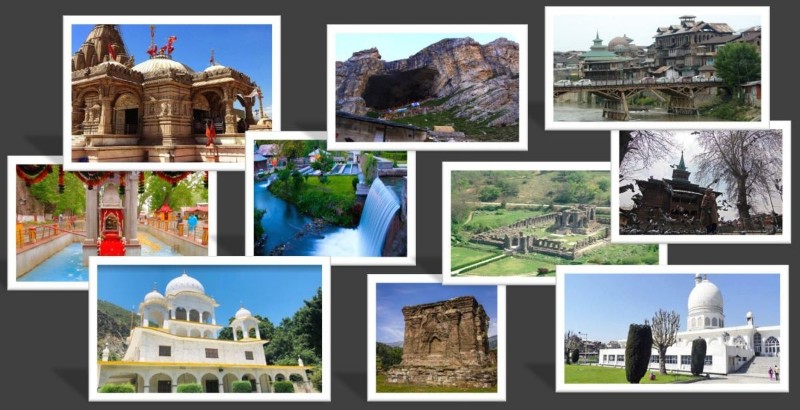
The Spiritual Harmony of Jammu and Kashmir
Jammu and Kashmir have always been known for their deep spiritual heritage and diverse cultural tapestry. The region’s social fabric has been woven over centuries through the harmonious coexistence of various faiths, traditions, and ways of life. Temples, shrines, and sacred spaces, regardless of religious affiliations, have not only served as places of worship but also as symbols of shared values such as compassion, mutual respect, and unity.
The spiritual legacy of Jammu and Kashmir dates back thousands of years, with ancient Hindu shrines like the Amarnath Cave Temple, Sharada Peeth Shrine, and Pandrethan Shiva Temple, as well as the historical significance of Emperor Kanishka’s Fourth Buddhist Council, highlighting the region’s rich civilization and deep-rooted spiritual roots.
These diverse traditions coexisted in everyday life, with spiritual teachings emphasizing values of compassion, humility, and equality. Over time, these values became ingrained in the collective consciousness of the people, transcending religious boundaries.
Sufi shrines have played a pivotal role in promoting unity in Jammu and Kashmir, with revered figures like Sheikh Noor-ud-Din (Nund Rishi) and Laleshwari (Lal Ded) spreading messages of love, tolerance, and spiritual oneness. These shrines have welcomed individuals from all backgrounds, offering a space for reflection, peace, and emotional healing.
Temples in the region have not only been places of worship but also hubs of cultural activities, education, and philanthropy. They have served as focal points for community gatherings and celebrations, fostering a sense of togetherness among the people.
Events like the Amarnath Yatra symbolize collective participation and cooperation, bringing locals together to host pilgrims and strengthen bonds of trust and communal responsibility. Similarly, khanqahs across Kashmir continue to promote harmony and fraternity, welcoming individuals of all faiths and reinforcing the values of peaceful coexistence.
The spirit of unity in Jammu and Kashmir is evident in everyday life, with people standing by each other in times of joy and sorrow regardless of religious differences. The community comes together during important life events, transcending barriers and sharing the burden of life as one.
Religious events and festivals, such as Urs and temple fairs, serve as platforms for communal celebrations and unity. Acts of generosity, like food aid programs and community service, cultivate empathy and solidarity among the people.
The coexistence of mosques and temples in close proximity, as well as joint participation in sacred sites and annual fairs by Hindus and Muslims, exemplifies the shared practice of harmony in Kashmir rooted in mutual respect, coexistence, and cultural unity.
Recent initiatives in Jammu and Kashmir have highlighted inter-community cooperation in preserving religious sites and organizing religious conferences, further strengthening the bonds of unity and peace.
The temples and shrines of Jammu and Kashmir not only represent religious devotion but also embody history, art, and architecture. Preserving these sacred spaces is essential in upholding the region’s pluralistic ideology and fostering a sense of shared heritage among the people.
Through their teachings of compassion, honesty, and responsibility, temples and shrines instill values that promote social harmony and peaceful interactions within the community. The younger generation learns the importance of tolerance and mutual respect from these spiritual centers.
In times of adversity, religious spaces serve as sources of strength and hope, offering solace and healing to believers. They also serve as platforms for promoting harmony and unity, fostering a sense of togetherness among the people of Jammu and Kashmir.
By preserving and upholding the philosophy of these holy sites, the people of Jammu and Kashmir demonstrate their commitment to unity, peace, and humanity. These spiritual hubs stand as symbols of resilience, hope, and harmony, guiding the region towards a brighter future.
Contact: vadaiekashmir@gmail.com
