
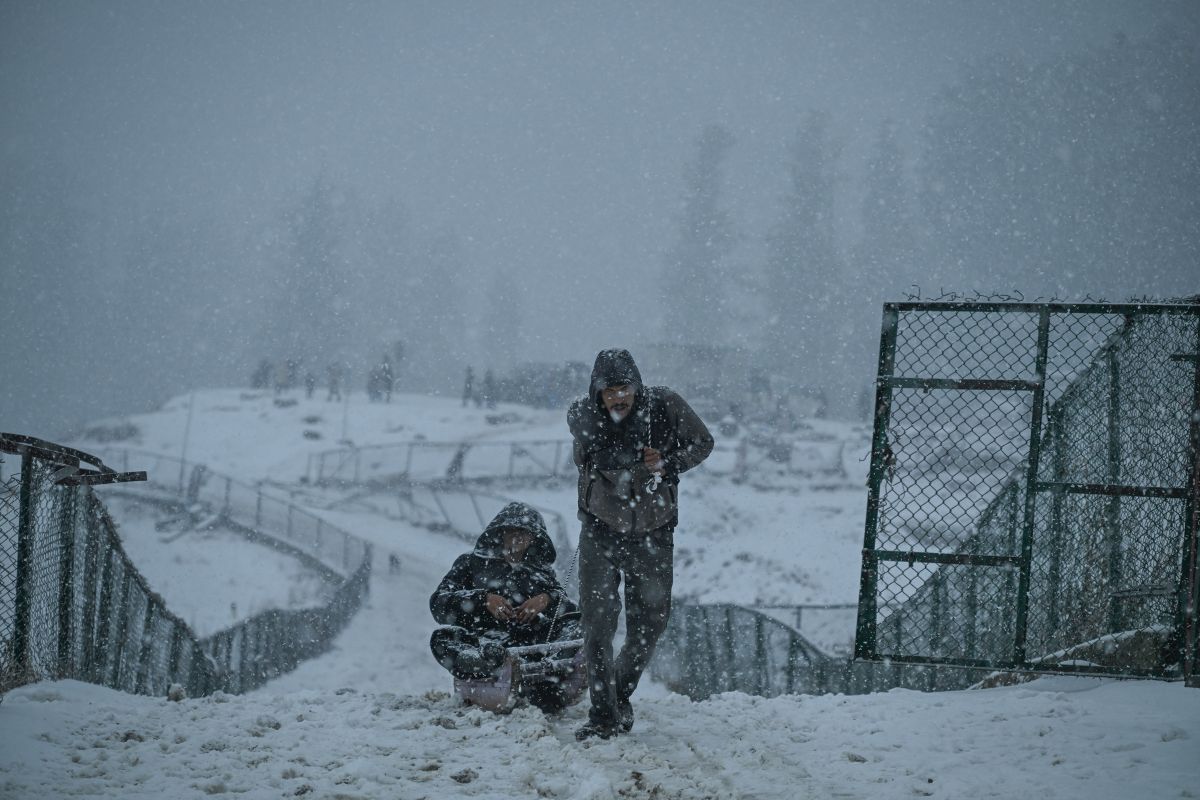
The Impact of Declining Snowfall on Kashmir’s Economy
By Uzma Qadir Mir
Kashmir, known for its snowy landscapes and winter tourism, is facing a concerning trend of decreasing snowfall in recent years.
The Chillai Kalan, a period once characterized by heavy snowfall, now often passes with minimal snow cover, impacting the region’s economy and livelihoods.
The decline in snowfall is not just a short-term weather anomaly but a long-term trend with far-reaching consequences for various sectors.
Tourism, a key driver of Kashmir’s economy, is heavily dependent on snow for activities like skiing, lodging, and guided tours.
Recent winters have seen a significant drop in snowfall, leading to a decrease in tourist bookings, hotel occupancy, and local incomes.
Moreover, the lack of snow affects the region’s water supply, energy production, and agriculture, posing a threat to livelihoods and economic stability.
Reduced snow coverage impacts water availability, agricultural productivity, and energy generation in Kashmir.
Climate change is exacerbating the situation, with rising temperatures, milder winters, and shrinking glaciers contributing to the decline in snowfall.
Policy responses in Jammu & Kashmir have been inadequate in addressing the challenges posed by declining snowfall.
Efforts to mitigate the impact of reduced snowfall should include strategies for water security, climate-adapted agriculture, and diversified energy sources.
It is crucial for Kashmir to adapt to changing weather patterns and implement proactive policies to sustain livelihoods and economic stability.
- The author is pursuing a Master’s in Public Administration at a Delhi-based university. She can be reached at [email protected].
Transform the following sentence from active voice to passive voice:
Active: The chef prepared a delicious meal for the guests.
Passive: A delicious meal was prepared for the guests by the chef.
