
Transforming Skilling Ecosystem in Jammu & Kashmir
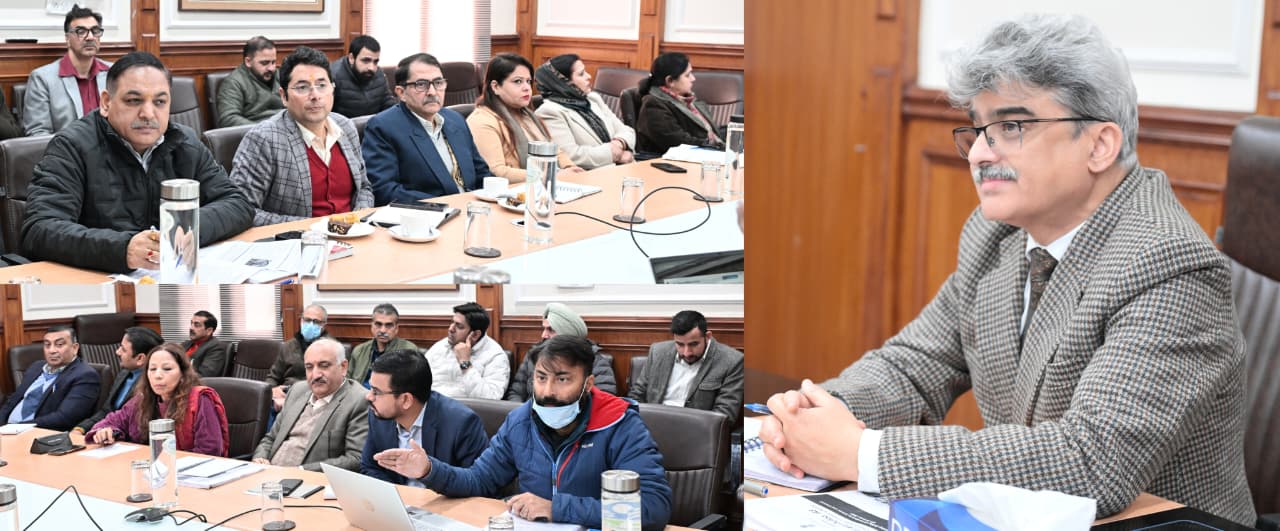
The Skill Development Department in Jammu & Kashmir has taken a significant step towards preparing the local population for upcoming employment opportunities. A comprehensive roadmap was presented to Chief Secretary Atal Dulloo, aiming to revolutionize the skilling landscape of the Union Territory.
The meeting witnessed the presence of Vice-Chancellors from local Universities, Director of IIM Jammu, Managing Director of J&K Bank, Secretary of Education, MD of Skill Mission, and representatives from esteemed institutions like IIT, NIFT, and other renowned academic and professional bodies.
Chief Secretary Dulloo highlighted the importance of exploring Global Capability Centres (GCCs) in Jammu & Kashmir to enhance employment prospects. He also proposed the development of fellowship programs to nurture a skilled workforce within the UT.
The Chief Secretary commended the roadmap for its inclusivity and forward-thinking approach. However, he stressed the need for practicality, outcome-driven strategies, and clearly defined roles for all participating institutions, including national-level entities such as IITs, IIMs, AIIMS, NITs, Universities, and professional institutions.
Emphasizing the link between industry and academia, the Chief Secretary called for stronger partnerships to ensure that skilling programs are market-aligned and geared towards future demands.
The Secretary of the Skill Development Department, Kumar Rajeev Ranjan, revealed that the roadmap aims to empower individuals in Jammu & Kashmir over the next five years. The goal is to provide industry-aligned skilling, promote inclusive growth, enhance employability, and bolster long-term economic resilience.
The roadmap envisions exposing 6–7 lakh school students to skilling, offering structured courses to 2–2.5 lakh college students, and providing technical training to 5–6 lakh youth and working-age individuals. The plan is designed around four integrated tracks, each catering to different stages of skilling and employment.
Implementation Strategy
The implementation strategy outlined by Director Shahzad Alam includes:
- Foundational Skilling in Schools: Introducing vocational and 21st-century skills to students from Classes 6 to 12.
- Career Launchpad in Colleges: Offering minor skilling courses, internships, and coaching for competitive exams.
- Industry-Ready Technical Skilling: Strengthening ITIs, polytechnics, and technical institutions through diversified course offerings.
- Upskilling and Lifelong Learning: Promoting short-term skilling convergence for existing workforce and informal sector.
The roadmap also includes plans for a unified job listing platform, both at national and international levels, to enhance job discovery and tracking for the youth of Jammu & Kashmir.
Stakeholders shared their insights on enhancing institutional frameworks, leveraging existing resources, and ensuring coordinated implementation for the success of the skilling ecosystem across J&K.
