
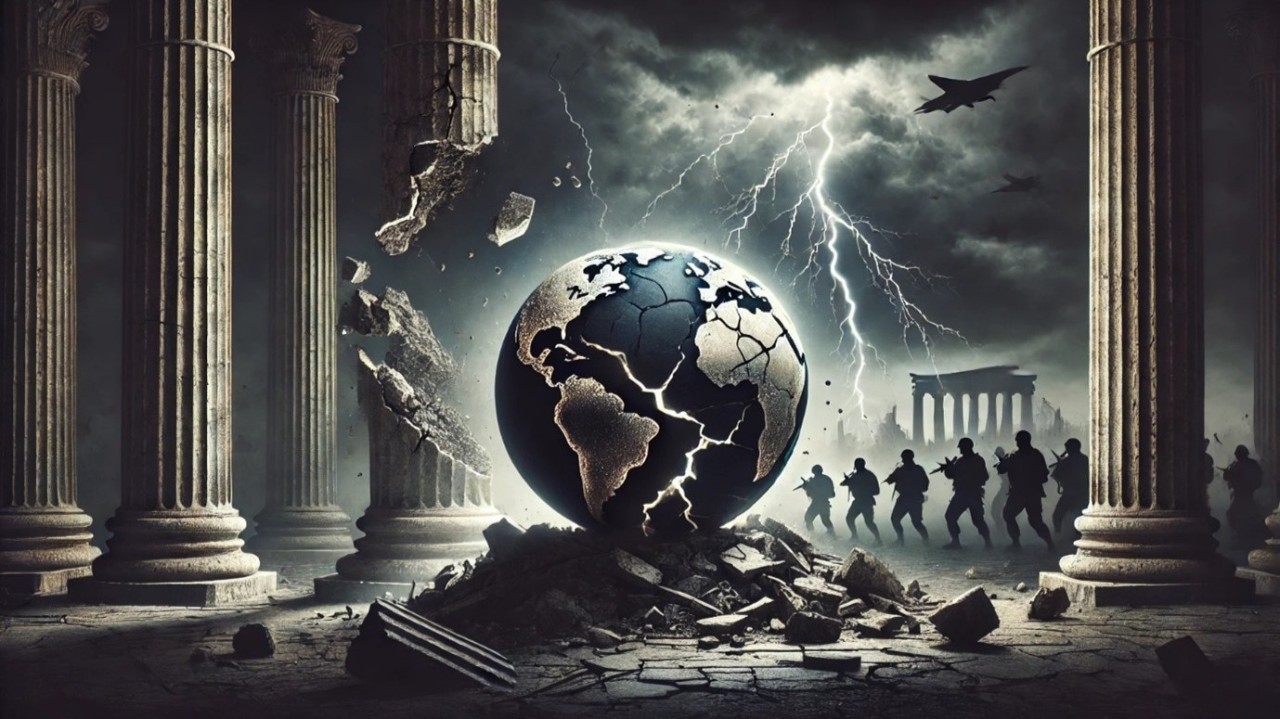
The Hague: Upholding International Law in a Changing World
Emerging from the ashes of devastating world wars, nations united to establish a framework of international rules and laws in an effort to prevent future large-scale conflicts. However, this global order, centered around the United Nations in New York, is now facing threats as the principle of “might makes right” regains prominence on the world stage.
UN Undersecretary-General Rosemary A. DiCarlo emphasized the importance of all member states adhering to the provisions of the UN Charter for the maintenance of international peace and security.
Recent events, such as the removal of Nicolás Maduro from power in Venezuela and his subsequent arraignment, have raised questions about the legality of such actions. The US administration justified the capture of Maduro by declaring the drug cartels in Venezuela as unlawful combatants, leading to an “armed conflict” with them.
This move aligns with President Donald Trump’s National Security Strategy, which aims to restore American dominance in the Western Hemisphere. However, concerns have been raised about the potential implications of such actions on the global legal order and the precedent it sets for future interventions.
Various world leaders and analysts have criticized the mission in Venezuela, warning against the erosion of international law and the use of force in resolving conflicts. French Foreign Minister Jean-Noël Barrot highlighted the importance of upholding the principle of non-use of force in international relations.
Implications for Global Security
Ukraine: The ongoing conflict in Ukraine, fueled by Russian aggression, presents a challenge to the European Union and NATO. The US administration’s stance on European security has raised concerns about the level of support Ukraine can expect in the face of external threats.
Russian Ambassador to the UN, Vasily Nebenzya, criticized the US mission in Venezuela as a return to lawlessness and called for a unified rejection of such actions by the international community.
Greenland: President Trump’s remarks about the strategic importance of Greenland have raised eyebrows in Europe. Danish Prime Minister Mette Frederiksen rejected any notion of annexation and emphasized the existing security agreements between Denmark and the US.
Taiwan: Speculation about potential Chinese actions against Taiwan in response to the US-Venezuela mission underscores the delicate balance of power in the region. China’s approach to Taiwan focuses on gradual pressure rather than direct military intervention.
The Middle East: Recent developments in Israel and Iran highlight the volatile situation in the region. The US administration’s willingness to intervene in conflicts and its stance on Iran’s domestic issues have drawn mixed reactions from the international community.
Europe and Trump: The relationship between the European Union and the Trump administration has faced challenges, particularly in the context of upholding international law. While the EU emphasizes the importance of respecting the UN Charter, some leaders, like Hungarian Prime Minister Viktor Orbán, question the effectiveness of international rules in regulating state behavior.
In conclusion, the evolving landscape of global politics raises important questions about the role of international law and the use of force in resolving conflicts. Upholding the principles of the UN Charter and promoting peaceful resolutions to disputes remain crucial in maintaining stability and security on a global scale.
