
The Historical Context of Jammu and Kashmir: A Narrative of Self-Determination
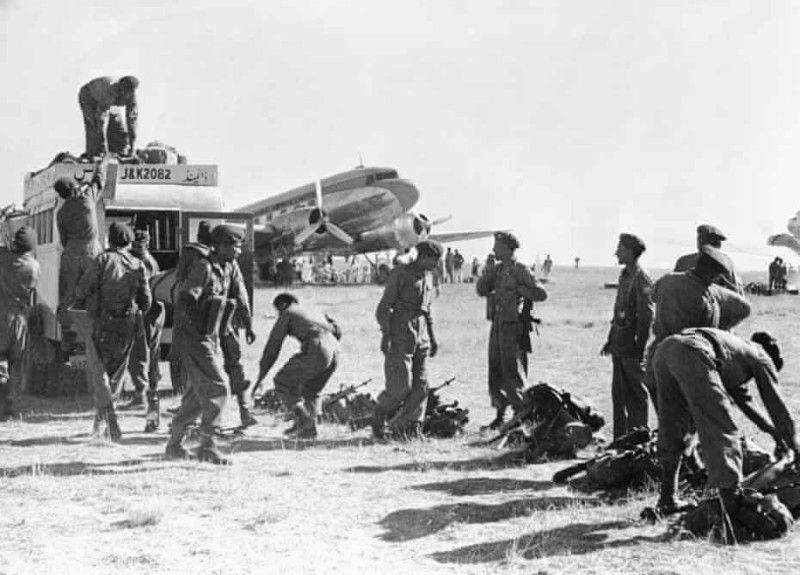
In October 1947, the plebiscite marked a significant chapter in the history of Jammu and Kashmir, with its unresolved implications seen in the region illegally occupied by Pakistan. Every year on 5 January, the international community witnesses a familiar script unfolding, labeled as “Self-Determination Day for Kashmir.” This day is characterized by raised posters, issued statements, and accusations against India for allegedly denying the people of Kashmir their right to choose their future.
However, for Kashmiris and Indians, this narrative represents a misrepresentation of their history, legal status, and political reality. The belief that Kashmir’s future remains undecided is a persistent myth in South Asian geopolitics, sustained not by truth but by strategic motives. Self-determination is not merely a slogan but a legal process, which Jammu and Kashmir formally and lawfully exercised in 1947 through the Instrument of Accession.
Contrary to popular belief, the Instrument of Accession was not provisional or conditional upon third-party approval. It was a sovereign decision made amidst a Pakistan invasion in October 1947 with the consent of the people, integrating Jammu and Kashmir into the Indian Union irrevocably. The United Nations Security Council Resolution 47 (1948) outlined a sequence that required Pakistan to withdraw all forces from the occupied territories, a condition that was never fulfilled.
Kashmir’s reality today stands in contrast to the narrative of “unfinished self-determination.” The political choice of Jammu and Kashmir was decisively exercised in 1947 through the lawful signing of the Instrument of Accession, aligning the state within India’s constitutional framework. Kashmir operates as a participatory democracy, with its people exercising rights, participating in elections, challenging authorities, and enjoying civil, political, and economic freedoms.
The annual observance of 5 January as “Self-Determination Day” is viewed more as a propaganda exercise to question India’s sovereignty and silence Kashmiris who identify as Indian. It serves to divert attention from Pakistan’s internal issues while freezing Kashmir as a perpetual grievance. Indian Kashmiris find this narrative alienating, as it undermines their agency and democratic participation within India.
The concept of sovereignty in Jammu and Kashmir is not a theoretical debate but a lived reality rooted in identity, citizenship, and democratic engagement. Millions of Kashmiris view themselves as Indian citizens actively negotiating governance, rights, and accountability within a shared constitutional framework. To challenge India’s sovereignty is to question their citizenship and diminish their political voice.
On the other hand, self-determination is urgently needed in Pakistan-occupied Jammu and Kashmir and Gilgit–Baltistan, where territories were absorbed through force, lacking constitutional equality and political representation. The regions face human rights abuses, political marginalization, and systematic exclusion, demanding genuine political agency and recognition.
The United Nations and the international community must acknowledge the historical and democratic reality of self-determination in Jammu and Kashmir, exercised through the Instrument of Accession in 1947. The narrative of unresolved self-determination undermines India’s sovereignty and legitimizes human rights abuses in Pakistan-occupied territories.
For a genuine discussion on self-determination, the focus should shift to Pakistan-occupied Jammu and Kashmir and Gilgit–Baltistan, where rights, dignity, and political voice are suppressed. An unbiased assessment by an independent UN team is essential to highlight the disparities in governance, human rights, and political participation between the two regions.
Ultimately, the comparison should not be framed as a manufactured dispute but as a contrast between integration and deprivation, citizenship and occupation. Only through honest evaluation can the true need for self-determination be identified and addressed appropriately.
For more insights on the historical context and current dynamics of Jammu and Kashmir, feel free to reach out to the writer, a student activist, at soulofkashmir1@gmail.com.
