
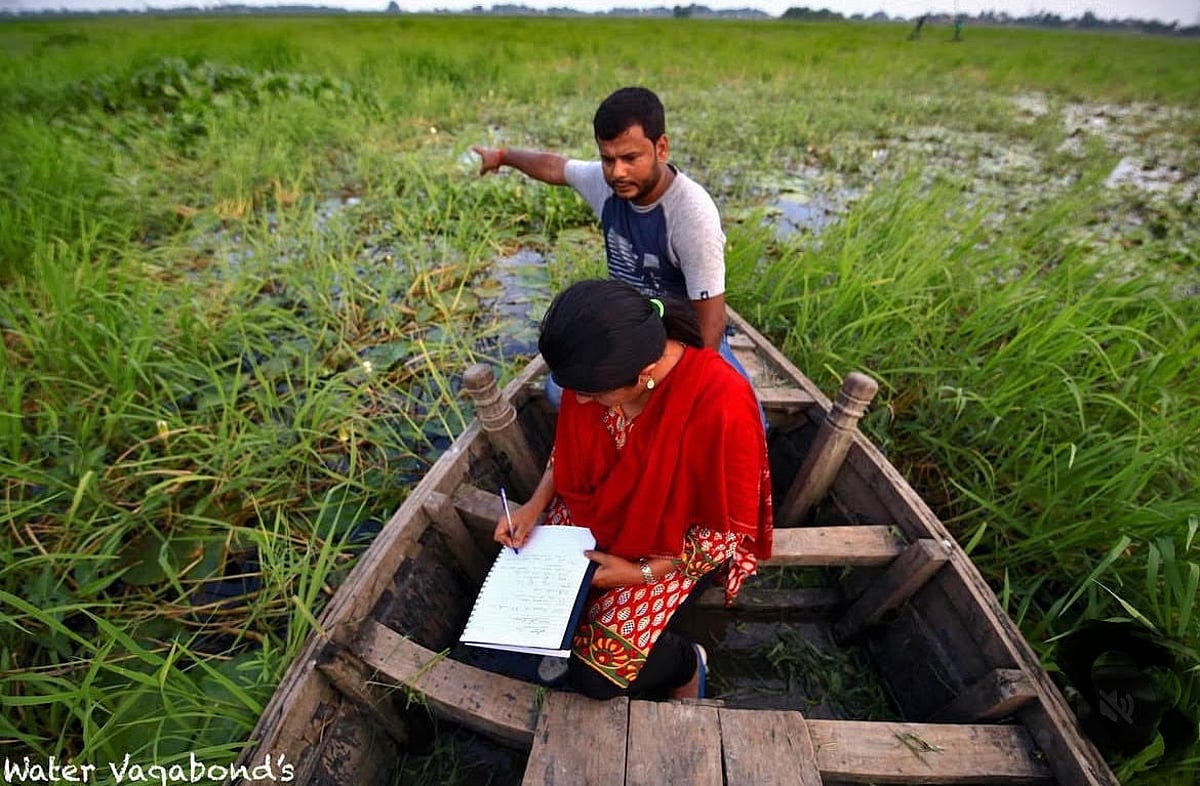
Unveiling the Truth Behind Government Data in Environmental Journalism
Throughout the past year, I have come to realize the stark disparity between government reports of progress and the harsh realities faced on the ground. A prime example of this can be seen in Tripura, where official statistics boast of over 86% functional tap water coverage. However, my firsthand experience revealed that tribal women in the region still endure arduous journeys to fetch water from mountain springs due to the lack of proper water infrastructure in their communities.
These eye-opening encounters have only solidified my belief that environmental journalism cannot be automated or reduced to mere data points. True journalism requires on-the-ground reporting and firsthand accounts to ensure that the voices of the most vulnerable are not silenced by digital statistics.
The Role of Grassroots Reporting in the Age of AI
In an era dominated by social media and AI technologies, the need for grassroots reporting has become more crucial than ever. While AI algorithms can sift through vast amounts of data, they lack the human touch and empathy needed to accurately portray the reality of environmental issues.
As a journalist, I acknowledge the potential of AI in enhancing news reporting through data analysis and automation. However, it is essential to remember that AI should complement, not replace, the fundamental principles of journalism.
Ensuring Ethical Use of AI in Journalism
Ethical considerations must always guide the integration of AI in journalism. While AI can provide valuable insights into complex issues such as climate change, it should never overshadow the importance of on-the-ground reporting and human experiences.
By prioritizing ethical practices and incorporating AI as a tool rather than a replacement for human journalists, we can ensure a more comprehensive and accurate representation of environmental issues.
Preserving the Voices of the Unseen
It is crucial to recognize that AI models, no matter how advanced, can never fully capture the lived experiences of marginalized communities. By relying solely on mainstream datasets, we risk overlooking the stories of individuals whose lives are not easily digitized.
As journalists, it is our responsibility to amplify the voices of those who are often unheard in traditional media narratives. By combining the power of AI with the empathy of human storytelling, we can strive towards a more inclusive and authentic representation of environmental issues.
