
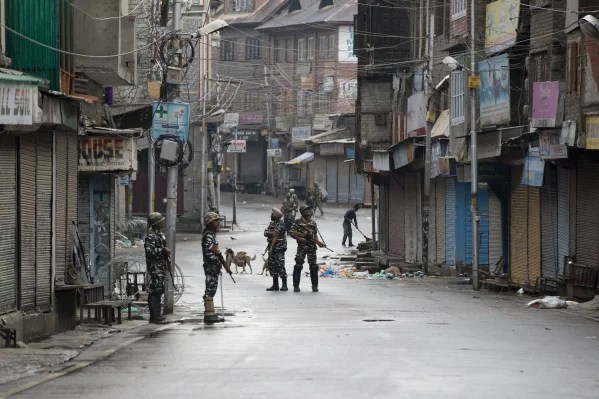
The Constitutional Reorganisation of Jammu and Kashmir: A Shift from Ambiguity to Clarity
The recent constitutional reorganisation of Jammu and Kashmir has brought about a significant change, moving the region from a state of prolonged ambiguity to administrative clarity. This transformation marks a crucial turning point in the history of the region.
The Significance of January 5 in Kashmir
January 5 holds a special significance in the narratives sponsored by Pakistan, portraying it as a key milestone in the Kashmiri “struggle for self-determination.” However, despite the efforts to keep this date alive through various means, it no longer garners the same level of attention or relevance in Jammu and Kashmir.
The selective reading of history surrounding January 5 fails to acknowledge the legal and constitutional realities of Jammu and Kashmir’s accession to India in 1947. This accession was lawful, voluntary, and in line with the established process followed by numerous other princely states at the time.
The Evolution of January 5
Over the years, January 5 has been used as a symbolic tool to maintain political uncertainty rather than as a roadmap for the future. However, this symbolism has lost its power over time, as the date no longer evokes public mobilisation or civil participation within Kashmir itself.
External amplification, particularly from Pakistan, has been instrumental in keeping January 5 alive. However, Pakistan’s credibility has been called into question due to its internal practices in regions under its control, leading to a disconnect between its rhetoric and reality.
India’s Approach to Jammu and Kashmir
In contrast to Pakistan’s symbolic politics, India’s approach to Jammu and Kashmir has been rooted in constitutional legitimacy and democratic engagement. The recent reorganisation of the region has brought about greater transparency in governance and accountability structures, shifting away from symbolic politics towards tangible governance.
The societal shift within Kashmir, particularly among the younger generation, reflects a move towards prioritising education, employment, and stability over emotionally-charged slogans. This shift away from violence and instability is evident in the declining relevance of dates like January 5.
The Future of Jammu and Kashmir
As Kashmir evolves towards stability, governance, and opportunity, the empty slogan syndrome associated with dates like January 5 is fading. The region is moving towards a future anchored in India’s constitutional order and the aspirations of its people, rather than hollow rhetoric from across borders.
It is clear that history cannot be frozen, and the future of Jammu and Kashmir must be built on progress and development, not repetition of the past. The region’s path forward lies in embracing change and moving towards a future of stability and growth.
