
Unpacking Claims of Islamophobia and the Transformation of Kashmir After 2019
As Pakistan continues to weaponize the rhetoric of Islamophobia, ground realities in Kashmir tell a different story, one of declining terrorism, renewed stability, and rapid socio-economic revival. The stark contrast with conditions in Pakistan-occupied Kashmir exposes the deeper political motives behind Islamabad’s narrative and strengthens India’s counter-claim before the world.
For decades, the relationship between India and Pakistan has been shaped by competing narratives, each attempting to influence global opinion on issues ranging from terrorism to minority rights. Among the most persistent themes pushed by Pakistan is the allegation that India is gripped by Islamophobia. This has become a recurring claim in international forums, despite the diverse, complex, and often contradictory realities of India’s social fabric. To understand the fault lines of this argument, one must examine not only India’s own internal dynamics but also Pakistan’s long-standing involvement in promoting militancy in the region, especially in Jammu and Kashmir, and the stark contrast between Kashmir’s trajectory after the abrogation of Article 370 and the continued unrest in Pakistan-occupied Kashmir.
India is home to over 200 million Muslims, one of the world’s largest Muslim populations who participate in every field of life: politics, business, entertainment, academia, civil services, the judiciary, and the armed forces. The lived reality of Indian Muslims is far too complex to be reduced to a term as sweeping and simplistic as “Islamophobia.” Yet Pakistan repeatedly deploys this phrase, not as a genuine concern for Muslims, but as a geopolitical tool to delegitimize India on the global stage. What often goes unacknowledged is that Pakistan, since the late 1980s, has been the principal architect and financier of militancy in Kashmir, a campaign executed under the guise of religion.
The irony lies in Pakistan’s repeated invocation of “jihad” as a justification for violent extremism in Kashmir. What Islamabad packages as resistance or liberation has long been a carefully manufactured doctrine that distorts the teachings of Islam. The true meaning of jihad bears no resemblance to the militancy exported across the Line of Control. In Islamic theology, jihad is first and foremost an internal, moral struggle—the effort to better oneself, to live ethically, to uphold family responsibilities, to show compassion, and to embody justice. This is often referred to as the “greater jihad,” emphasizing personal spiritual improvement. The external dimension—the “lesser jihad”—never sanctions violence against innocents, nor does it provide a religious foundation for terrorism. Yet for years, Pakistan-backed groups co-opted religious vocabulary to mask their real motives: geopolitical leverage and deniability through proxy warfare.
Before 2019, Jammu and Kashmir bore the tragic brunt of this strategy. The Valley lived under the shadow of targeted killings, bombings, separatist intimidation, and cross-border infiltration. Generations of Kashmiri youth grew up surrounded by violence, with economic stagnation and fear dictating daily life. The ripple effects were visible everywhere: declining tourism, shuttered cinemas, stalled investments, and a political process repeatedly derailed by terror attacks. For many families, life was measured not in aspirations but in anxieties—whether their children would return safely from school, whether markets would open without a shutdown call, whether another blast might disrupt whatever fragile normalcy existed.
It is in this context that India’s decision to abrogate Article 370 in August 2019 marked a tectonic shift. The move was controversial, debated vigorously, and in many quarters deeply emotional. But its long-term consequences are increasingly visible on the ground. Five years after the constitutional change, Kashmir’s landscape—social, political, and economic—tells a story radically different from the one Pakistan continues to broadcast to the world.
Tourism, once crippled by instability, has reached record highs. Domestic and international travelers now visit the Valley in numbers unseen in decades, drawn not only to the natural beauty but to the renewed sense of peace. Hotels that once struggled to survive now operate at full occupancy during peak seasons. Adventure sports, film shoots, and cultural festivals—activities that had all but vanished—now contribute significantly to local economies. In the years following the abrogation, Bollywood and international filmmakers returned to Kashmir’s breathtaking scenery, reviving an industry that had long been dormant due to security fears.
The return of cinema halls is itself symbolic. For nearly three decades, cinemas in Kashmir remained closed, victims of militant diktats and terror threats. Their reopening is more than a commercial revival—it represents the reclaiming of public spaces, a restoration of normalcy, and an assertion of cultural freedom that had been suppressed for far too long.
Equally transformative is the revival of sports culture. Kashmir now hosts major tournaments, and international cricket events have taken place with overwhelming public enthusiasm. For the youth, sports are not just entertainment but a gateway to opportunity and recognition. Football and cricket academies, refurbished stadiums, and government-backed sporting infrastructure have provided young Kashmiris with avenues that were once unimaginable in a conflict-ridden region.
Development has also accelerated at a pace rarely witnessed before. Roads, bridges, tunnels, healthcare facilities, universities, and rural infrastructure projects have expanded connectivity and access. The long-pending Zojila and Z-Morh tunnel projects, aimed at ensuring all-weather connectivity, have seen rapid progress. Investments in electricity, water supply, and digital connectivity have reshaped daily life, bringing remote areas into the national mainstream. For the first time in decades, investors both domestic and international are showing credible interest in the Valley, opening the door to job creation and entrepreneurial growth.
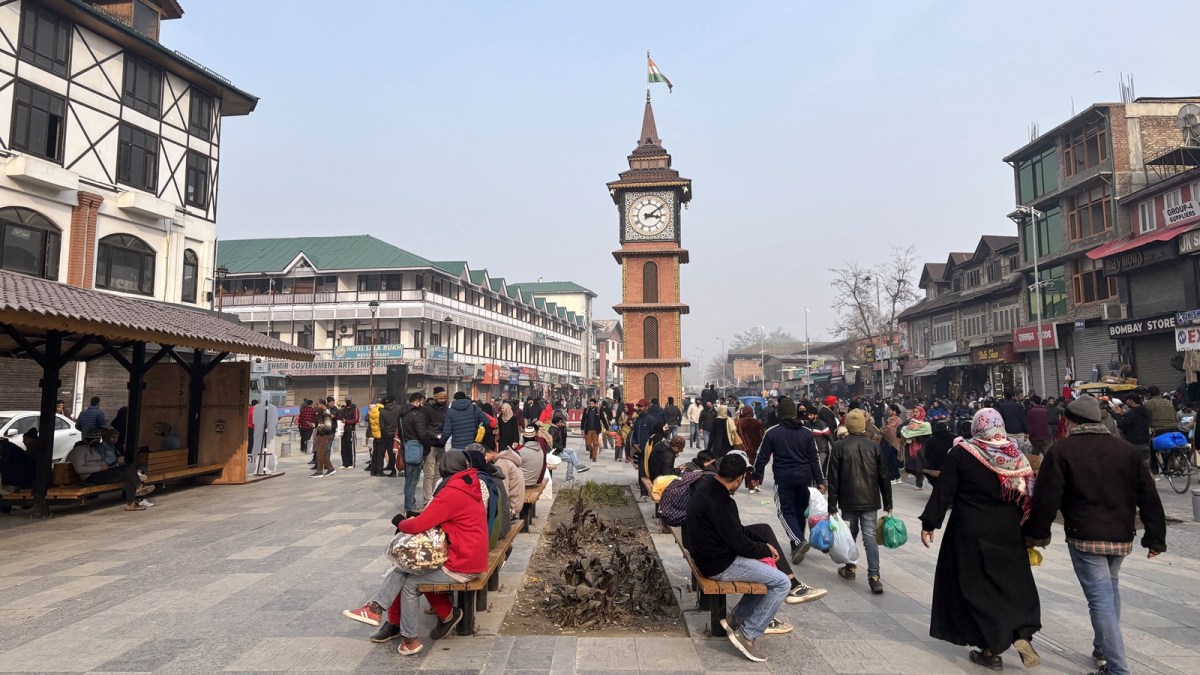
Most importantly, everyday life has reclaimed a sense of normalcy. Stone-pelting incidents, once a common sight, have drastically reduced. Markets operate without fear of sudden closures. Schools and colleges function more consistently. The overall atmosphere, while not devoid of challenges, reflects a society finally breathing without constant tension.
Across the Line of Control, however, the picture is drastically different. Pakistan-occupied Kashmir is today a region marked by silence—not the silence of peace, but the silence of fear. Reports from Pakistan-occupied Kashmir highlight rising anger against the establishment, economic exploitation, and the suppression of political and civil rights. Protests demanding electricity, water, employment, and autonomy have been met with force. Journalists face intimidation, activists are detained, and dissenting voices routinely disappear from public view. Violence, harassment, and unchecked corruption plague the region. The stark contrast between the two sides of Kashmir has never been more pronounced, and global observers have begun to take note.
While Kashmir witnesses increased tourism, Pakistan-occupied Kashmir grapples with declining infrastructure. While cinemas, sports, and cultural avenues flourish in the Valley, Pakistan-occupied Kashmir’s youth face limited opportunities and persistent state control. While India opens space for democratic processes, Pakistan’s governance in Pakistan-occupied Kashmir has grown increasingly authoritarian. These differences speak volumes more powerfully than any rhetoric exchanged at global platforms.
Pakistan’s attempt to frame India as Islamophobic becomes difficult to sustain when contrasted against its own track record in both governance and human rights. The use of terrorism as a state-sponsored tool has led to decades of instability not only in Kashmir but within Pakistan itself. The radicalization once exported across borders has now turned inward, contributing to sectarian violence, internal displacement, and countless lives lost. The religious minorities Pakistan claims to defend in India face far worse conditions within its own borders, where blasphemy laws, sectarian militias, and systemic discrimination continue to shape daily existence for many communities.
India, like any large democracy, is not without its challenges—social tensions, political differences, and instances of communal discord do exist. But reducing a nation of over a billion people to a single label ignores its constitutional framework, its pluralistic traditions, and the lived experiences of millions of Muslims who continue to thrive within its democratic structure. Islam in India is neither foreign nor marginalized; it is deeply rooted in the subcontinent’s history, culture, and identity.
The transformation of Kashmir since 2019 underscores a broader reality: people yearn not for conflict but for peace, development, and dignity. No narrative, however forcefully projected, can overshadow the lived experiences of Kashmiris themselves, who can now walk the streets, run their businesses, and pursue their dreams with a sense of security long denied to them.
As global audiences evaluate the competing claims between India and Pakistan, the evidence on the ground increasingly speaks for itself. Kashmir’s growing stability, the revival of its cultural and social life, and the renewed optimism of its youth form a counter-narrative far more compelling than accusations of Islamophobia or fabricated stories of oppression. At the same time, the deteriorating conditions in Pakistan-occupied Kashmir reveal where genuine suppression and disenfranchisement are taking place.
aabidhussainmir2@gmail.com
