
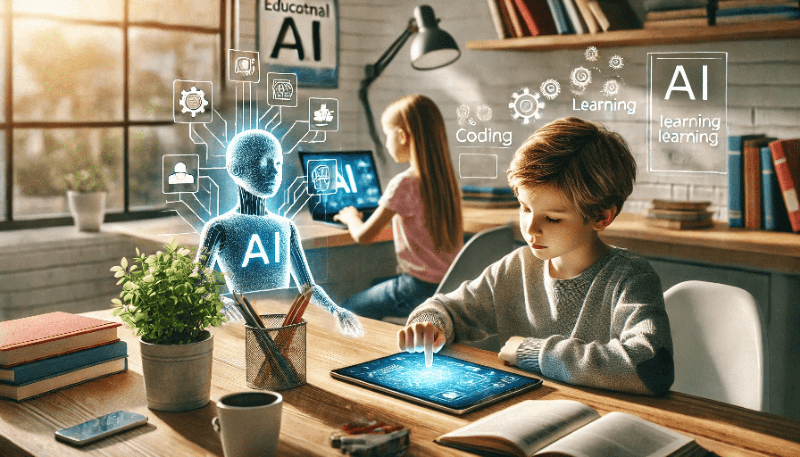
The Impact of Artificial Intelligence on Modern Education
Artificial Intelligence (AI) is revolutionizing the education sector in unprecedented ways, reshaping the learning experience for students and redefining the role of educators. In recent years, technology has been gradually integrated into classrooms across India, but the rapid acceleration of AI adoption following the pandemic and the introduction of the National Education Policy (NEP) 2020 has propelled AI to the forefront of educational reform.
AI technology has introduced a myriad of tools and resources that are transforming every aspect of the learning process, from personalized learning platforms and automated assessments to virtual tutoring systems and data-driven insights. This transformation is particularly significant in regions like Jammu and Kashmir, where geographical and infrastructural challenges often disrupt traditional learning environments. AI-driven solutions are helping students overcome these disruptions, bridge learning gaps, and access education in more equitable ways.
The Power of AI in Education
One of the key strengths of AI lies in its ability to analyze vast amounts of student data and identify individual learning patterns with unparalleled precision. By understanding what students have mastered, where they are struggling, and how they are progressing, AI systems can create customized learning paths tailored to each student’s needs. This level of personalized attention is challenging to achieve in a traditional classroom setting, where teachers are often faced with managing a diverse group of students with varying abilities and learning speeds. AI bridges this gap by ensuring that every student receives the support they need, freeing up teachers to focus on more meaningful interactions with their students.
However, despite the advancements in AI technology, the idea that AI could replace teachers entirely is misguided. While AI excels at analyzing data and identifying patterns, it lacks the human qualities that are essential for holistic human development, such as empathy, ethical judgment, and emotional resilience. Teachers bring a unique set of skills to education, drawing from their lived experiences, moral understanding, and social awareness to guide and mentor students. The future of education lies in integrating AI as a collaborative partner to teachers, rather than as a replacement.
The Evolving Role of Teachers
As classrooms in India adopt hybrid teaching models that incorporate AI-based resources, teachers are taking on new roles as designers of learning experiences, facilitators of competency-based growth, evaluators of technology, and mentors for lifelong learning. Their responsibilities now extend beyond traditional teaching methods, focusing on developing critical thinking, creativity, digital literacy, environmental awareness, and ethical judgment in students. As AI takes on routine tasks, teachers have more time to engage meaningfully with their students, ensuring that education remains a deeply human experience empowered by technology.
One of the significant shifts in the role of teachers is the expectation for them to design personalized learning pathways for students based on AI insights. By leveraging AI data, teachers can create flexible learning plans that cater to individual student aptitudes and aspirations, aligning with the vision of NEP 2020 for competency-based learning. This personalized approach is particularly beneficial in regions like Jammu and Kashmir, where disruptions often lead to learning gaps. Teachers, supported by technology, can now guide students effectively through tailor-made strategies.
In addition to personalized learning design, teachers are increasingly responsible for tracking skills and competencies rather than focusing solely on syllabus completion. The modern learning environment emphasizes the development of skills such as problem-solving, digital communication, collaboration, and analytical thinking. Teachers play a vital role in monitoring the acquisition of these skills and helping students apply them in real-world scenarios. AI complements this process by identifying areas for improvement and suggesting tools or activities to strengthen specific skills.
Furthermore, teachers are now tasked with evaluating digital tools and technologies to ensure they are pedagogically sound, safe, and conducive to learning. In areas with limited internet connectivity, like parts of Jammu and Kashmir, selecting efficient, low-bandwidth tools is crucial for positive learning outcomes.
Preparing Students for the Digital Future
Teachers are also guiding students through the digital landscape, helping them navigate online platforms responsibly, understand digital ethics, and develop a credible online presence. As career opportunities evolve in the digital age, students must learn how to connect with mentors, engage in digital communities, and establish a professional online identity.
Assessment methods are evolving as well, moving away from traditional examinations to student portfolios that document ongoing learning, creativity, and achievements. These portfolios offer a comprehensive view of a student’s abilities and strengths, with AI tools assisting in organizing and analyzing the data while teachers provide the interpretation and direction that gives these portfolios meaning.
Teachers are also embracing the role of sustainability educators, encouraging students to engage with environmental issues, adopt sustainable practices, and appreciate ecological balance. This is particularly relevant in environmentally sensitive regions like Jammu and Kashmir.
The Synergy Between AI and Teachers
The integration of AI in education is not diminishing the importance of teachers but rather strengthening their central role in the learning process. Teachers are evolving into mentors, collaborators, and innovators who provide the heart, direction, and meaning to education. AI offers efficiency, insights, and personalization, while teachers offer humanity, wisdom, and guidance that technology cannot replicate.
As India moves towards a digitally transformed future, the synergy between AI and teachers will shape the success of education. This partnership will empower the next generation to navigate uncertainty with confidence, creativity, and ethical clarity. The classroom of the future will be enriched by technology but guided by teachers who understand that true education is a blend of technology and humanity.
The author, a senior analyst, can be contacted at: m.hanief@gmail.com
Follow on Twitter: @haniefmha
