
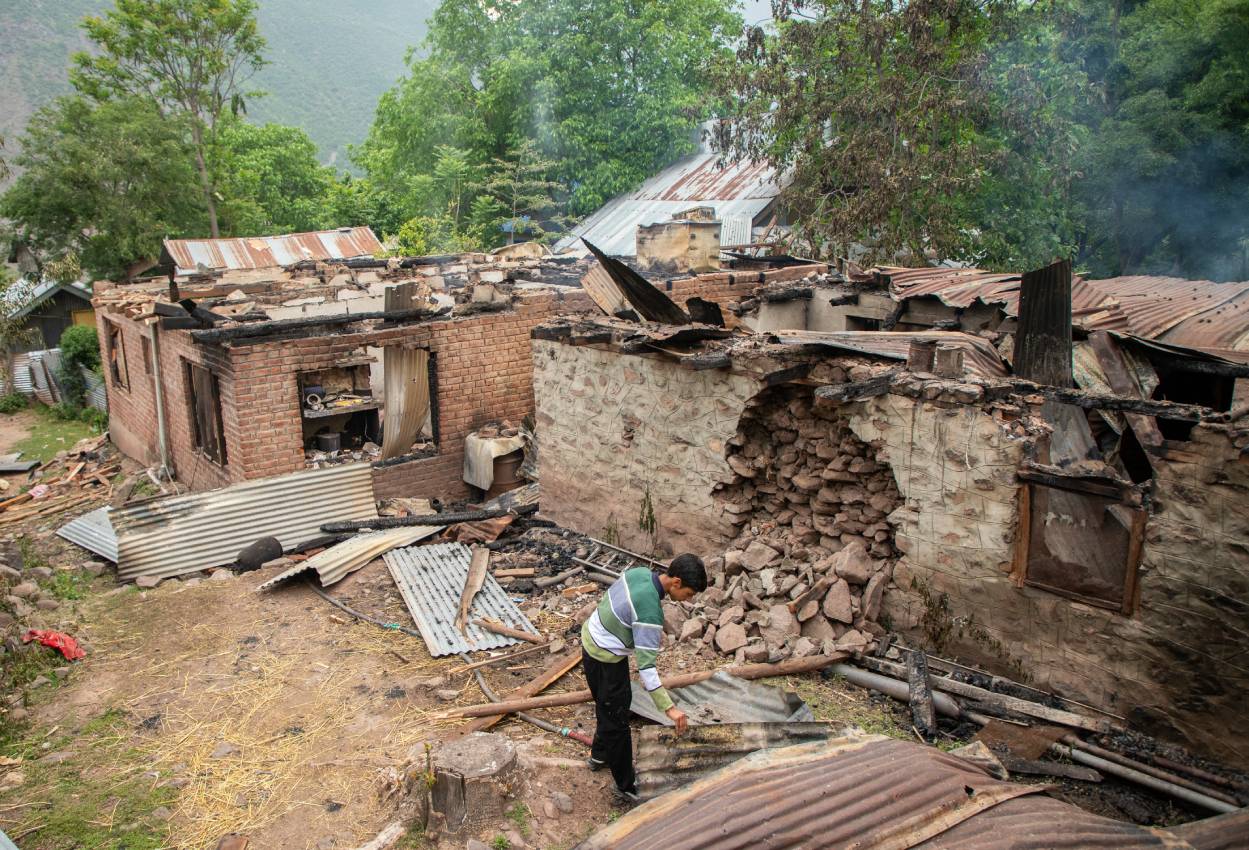
India and Pakistan have a long history of conflict, with several wars fought since 1947. However, the four-day confrontation in May 2025 stood out as a historic event, not for the traditional boots-on-the-ground approach, but for the unprecedented use of advanced technology and strategic thinking. The deployment of minds and machines on both sides marked a new era in warfare, shifting the focus from soldiers to machines and artificial intelligence operating across various battlefields.
The conflict, which lasted over 250 hours, provided a glimpse of the future of warfare in Asia, resembling a scene from a Hollywood blockbuster where machines and AI engage in combat without physically crossing borders. The use of drones played a significant role in the confrontation, with both countries employing a variety of drones for reconnaissance, surveillance, and attacks.
In India, the use of Israeli drones was prominent, while Pakistan utilized Turkish drones, with reports suggesting the involvement of experts from Turkey and Egypt in managing the drone operations. Suicide drones were also manufactured within India as part of technology transfer agreements with Israel. The extensive use of drones showcased a shift towards modern warfare tactics involving unmanned aerial vehicles.
The conflict also saw the deployment of sophisticated weaponry sourced from various countries. India utilized the Rafale aircraft and the Russian S-400 air defense system, while Pakistan relied on Chinese weapons and defense systems, including the J-10 C fighter jet. The exchange of fire primarily involved artillery exchanges in border areas, highlighting the increasing role of technology and satellite coordination in future conflicts.
Cyber warfare emerged as a crucial aspect of the confrontation, with reports of over 1.5 million cyber attacks launched by various groups targeting critical infrastructure in India. The attacks ranged from malware and phishing campaigns to misinformation and GPS spoofing, showcasing the growing importance of cybersecurity in modern warfare.
Social media also played a significant role in the conflict, with both countries engaging in a social media war using memes, deep fakes, and misinformation to influence public opinion. The use of social media as a tool for propaganda highlighted the evolving nature of information warfare in the digital age.
Diplomatic efforts to de-escalate the conflict were led by various countries, including the United States, with President Trump playing a key role in facilitating a ceasefire between India and Pakistan. The involvement of international powers reflected the global concern over the potential escalation of the conflict and the need for diplomatic solutions.
In the aftermath of the conflict, both India and Pakistan reiterated their commitment to bilateral dialogue while keeping key agreements like the Indus Water Treaty and the Shimla Accord in force. The focus remains on resolving issues through peaceful means and avoiding further escalation of tensions in the region.
Overall, the India-Pakistan conflict in May 2025 showcased the changing dynamics of modern warfare, with a greater emphasis on technology, cyber capabilities, and diplomatic interventions to prevent escalation. The use of drones, cyber attacks, and social media manipulation highlighted the evolving nature of conflicts in the digital age, underscoring the need for innovative approaches to peace and security in the region.
