
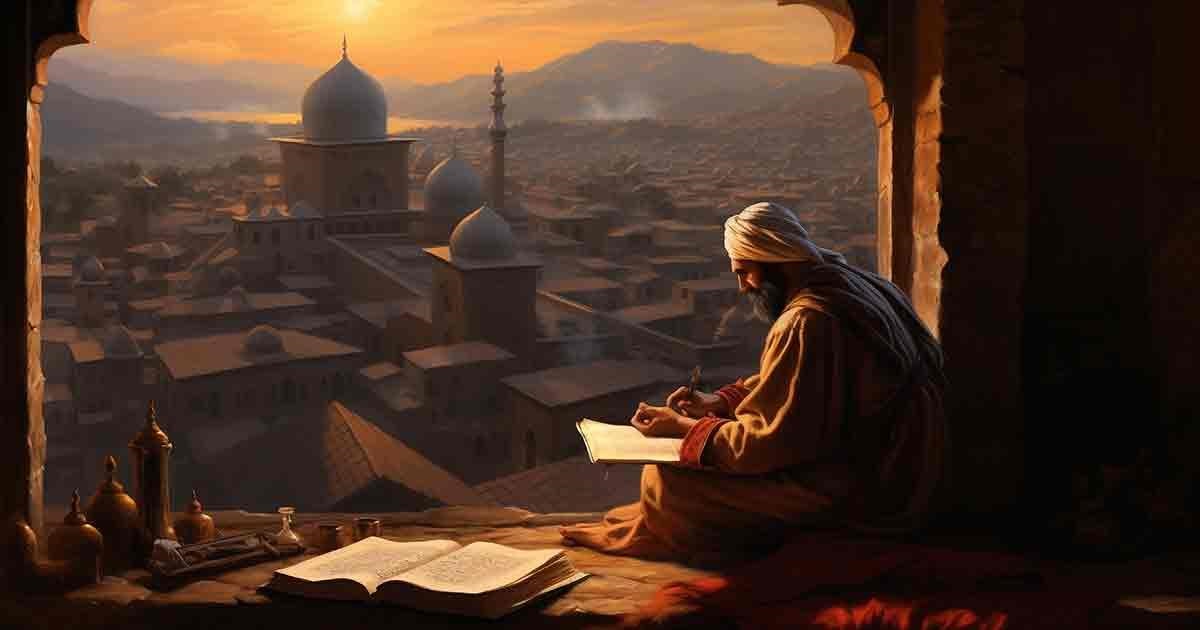
The Decline of Muslim Scientific Leadership: A Lesson from History
By Tawheed Parvaiz Bhat
There was a time when the Muslim world stood at the center of global knowledge.
Between the 8th and 14th centuries, cities like Baghdad, Cordoba, and Cairo shaped the intellectual direction of humanity. Science, philosophy, medicine, astronomy, and mathematics flourished together.
This era, often referred to as the Golden Age of Islam, was a result of a culture that emphasized reason, inquiry, and learning as acts of faith.
While Europe struggled with intellectual stagnation, Muslim scholars were actively translating, testing, and expanding knowledge from various sources such as Greek, Persian, Indian, and Roman. Institutions like the Bayt al Hikmah, the House of Wisdom in Baghdad, attracted thinkers from around the world, fostering a culture of knowledge exchange and advancement.
This spirit gave rise to eminent figures in the field of science and academia.
Al Khwarizmi laid the groundwork for algebra. Ibn Sina revolutionized medicine with his work, Al Qanun, which served as a guiding text for medical practitioners for centuries. Al Biruni made significant strides in astronomy and geography. Ibn al Haytham pioneered experimental physics and optics, championing observation and evidence-based research.
Their methodologies were ahead of their time, relying on reason, experimentation, and a meticulous study of the natural world.
Religion played a crucial role in driving their scientific endeavors.
The Qur’an consistently encouraged people to observe nature and ponder over creation, emphasizing the importance of understanding the world as a means to comprehend divine order.
However, this remarkable civilization began to lose its momentum over time.
The decline of Muslim scientific leadership was multifaceted, with one significant factor being the waning of critical thinking.
Independent reasoning, known as ijtihad, gradually gave way to blind imitation or taqlid, stifling the culture of questioning and exploration.
Political upheavals further exacerbated the situation, as internal conflicts drained resources and stability, hindering the progress of scientific pursuits.
The devastating Mongol invasion of Baghdad in 1258 dealt a severe blow to the region, resulting in the destruction of libraries, loss of scholars, and the ruination of institutions. This event disrupted the transmission of knowledge and eroded intellectual confidence.
Another pivotal moment came when scientific endeavors became detached from everyday religious and social life.
Scientific inquiry began to take a backseat to ritual practices, while in Europe, Muslim scientific texts were embraced, translated into Latin, and built upon, catalyzing the Renaissance and the Scientific Revolution.
As the Muslim world lagged behind, the balance between science and faith began to tilt.
Early Muslims viewed the Qur’an as a guide to understanding the world, leaving room for reflection, research, and discovery across generations.
Over time, however, the Qur’an became predominantly associated with ritualistic recitation, diminishing the practice of deep reflection, or tadabbur.
The once-strong connection between revelation and reason started to fade, distancing Muslims from the scripture’s vision.
The Qur’an continually urges humanity to explore the world, highlighting the stages of human development, the balance of nature, and the signs scattered throughout the universe.
Modern science now corroborates many of these truths through its own methodologies, emphasizing the need for responsible engagement.
Today, Muslim societies face a critical responsibility.
Religious schools must integrate modern science into their curriculum, universities should serve as hubs for research and innovation, and professionals in various fields such as medicine, engineering, environmental science, and technology must ethically study nature guided by moral values.
Educational reform, a scientific mindset, and ethical innovation are imperative for the advancement of Muslim societies in the contemporary era.
The history of Muslim scientific excellence serves as a reflection of the past and a roadmap for the future.
As exemplified in works like Kitab al Urooj, nations thrive through intellectual pursuits and falter through neglect.
The Qur’an remains a guiding beacon, illuminating the path for those who reflect, explore, and apply its wisdom.
Rekindling that spirit may pave the way for a resurgence of what was once lost.
Author Bio:
-
- The author is a teacher and columnist specializing in education, ethics, environment, and emerging social challenges in the digital age.
Transform the following:
Original: “I don’t have time to do this assignment.”
Transformation: “I am unable to complete this assignment due to lack of time.”
